 driveway years
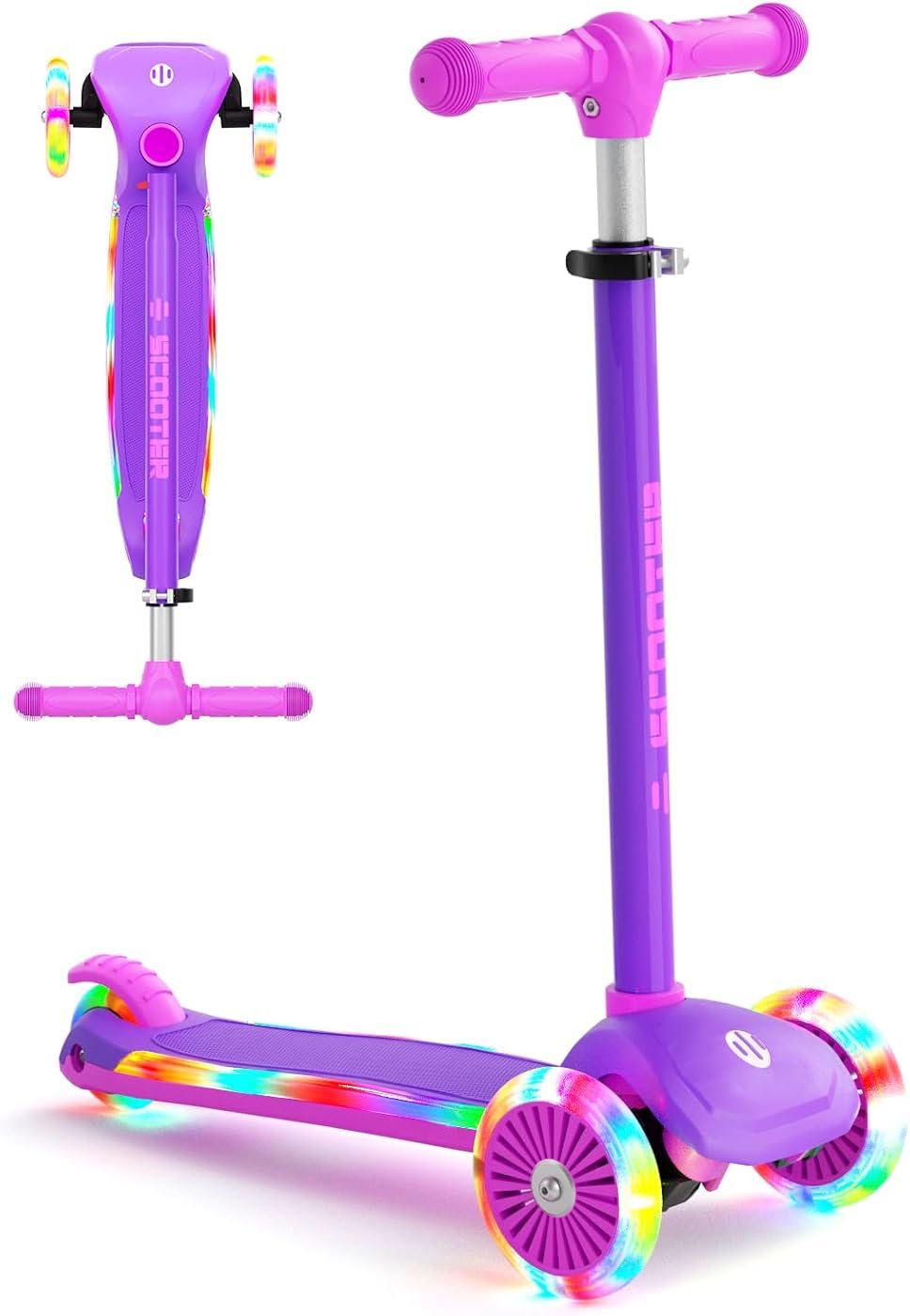
XJD 3-wheel kids scooter
What a child tends to ask for the summer after the XJD balance bike is mastered.
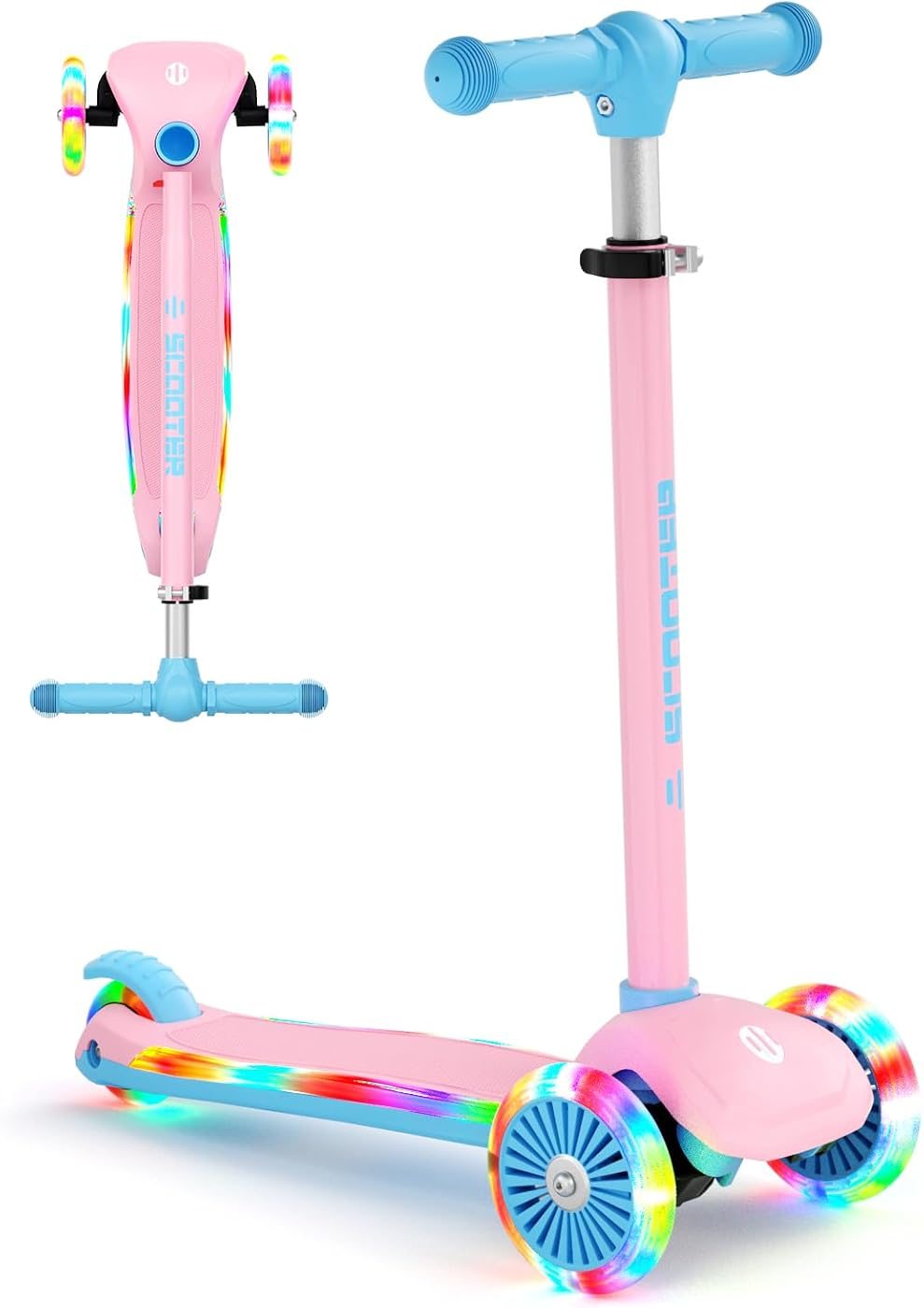
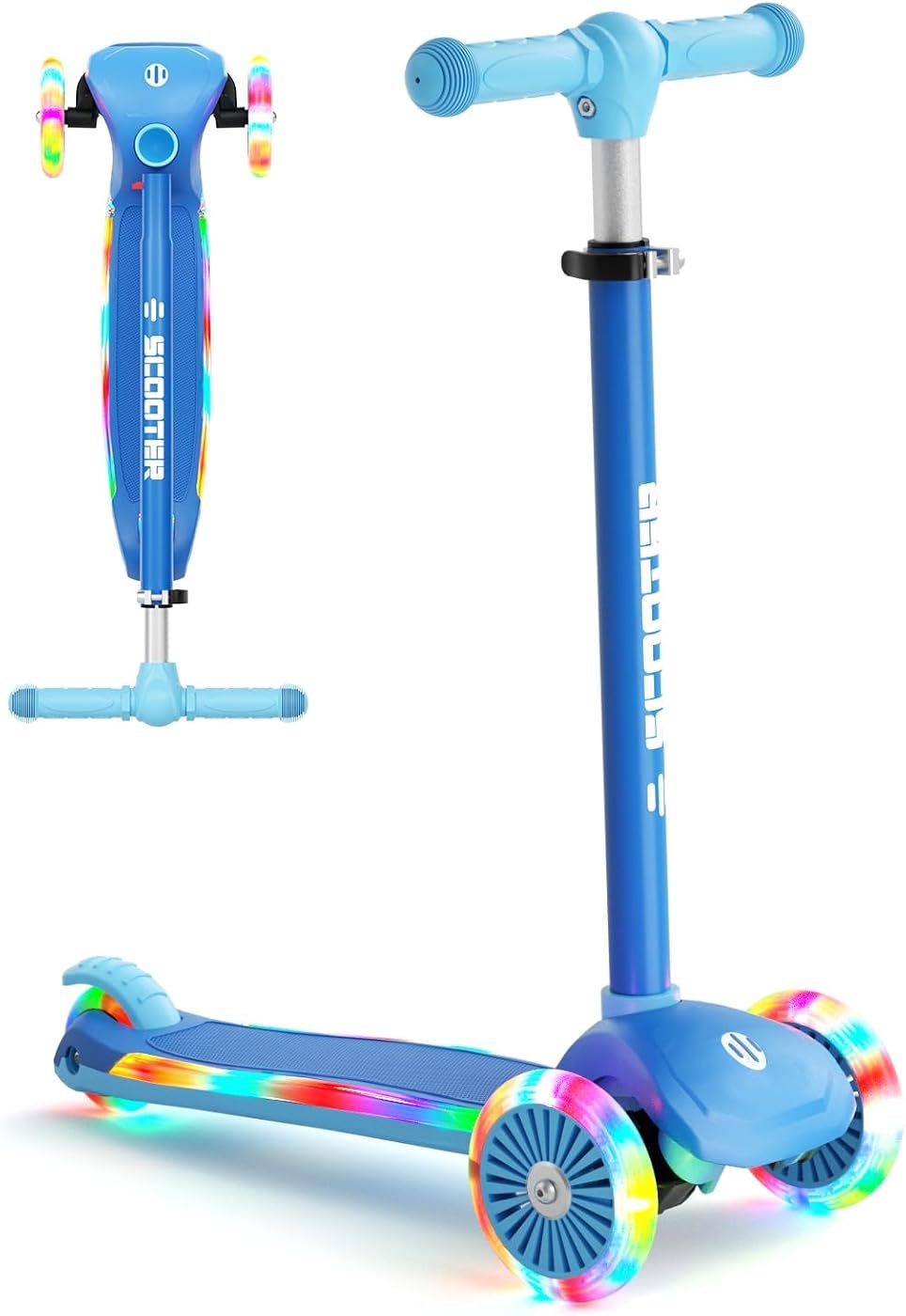
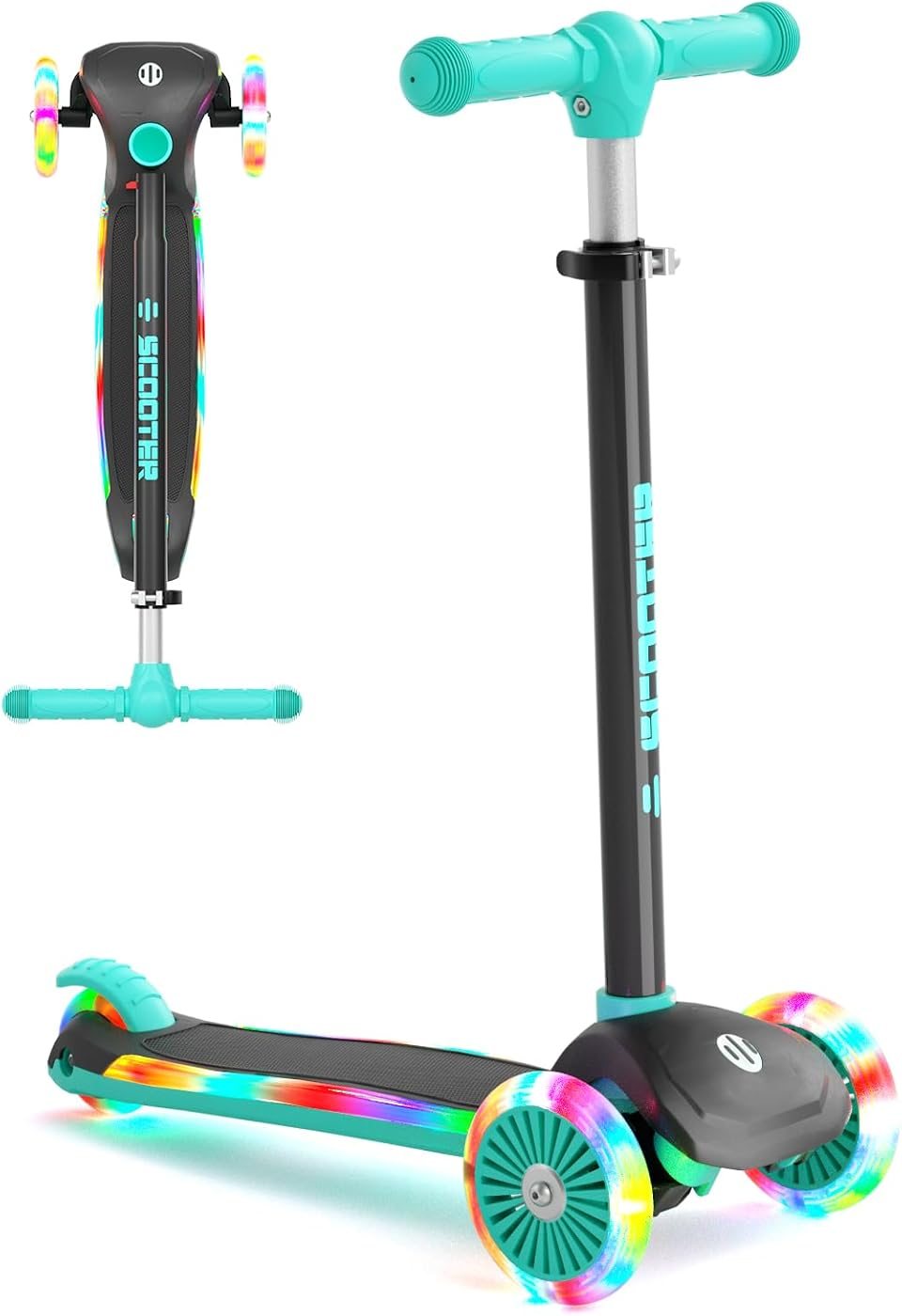
Two wheels at the front, one at the back, and no steering in the bars at all. You lean, the deck tips, the scooter turns, and a two year old works that out faster than an adult does. Four colours, one frame, ages two to eight.
The wheels light up when they spin, from a magnet rather than a battery, so there is nothing to charge and nothing to switch on. It is the whole reason the scooter gets chosen over the pram on the walk to nursery.
Everything on this shelf, with the price it carries today
All 4 on this shelf
Deck, stem and brake
The stem sets to four heights with a collar and a pin, covering roughly 22 to 30 inches, so one scooter lasts from two to eight. The deck is a wide non-slip tread low to the ground, which makes pushing off easy and falling off boring. The rear brake is a sprung fender you stand on.
Rated to 110 pounds. The bars have soft, supportive foam grips with closed ends, and the whole thing weighs about five pounds, light enough that a child who gives up halfway can carry it the rest of the way. It feels cheap in the hand and is not; the castings are aluminum under the paint.
- Lean-to-steer three-wheel deck
- Four-stage stem, roughly 22 to 30 inches
- Light-up wheels, no battery
- Rear fender brake
- Rated to 110 pounds, weighs about five
Two minutes out of the box
Push the stem into the deck until it clicks, and that is the assembly. One pin, no tools needed for the installation at all, and the modular design means the stem, the deck and the wheels come apart again for a car boot or a plane. Wheels are polyurethane and replaceable.
Check the clamp is fully home before the first ride by pulling up hard on the bars. It is the only thing on this scooter that can be got wrong.
Around it
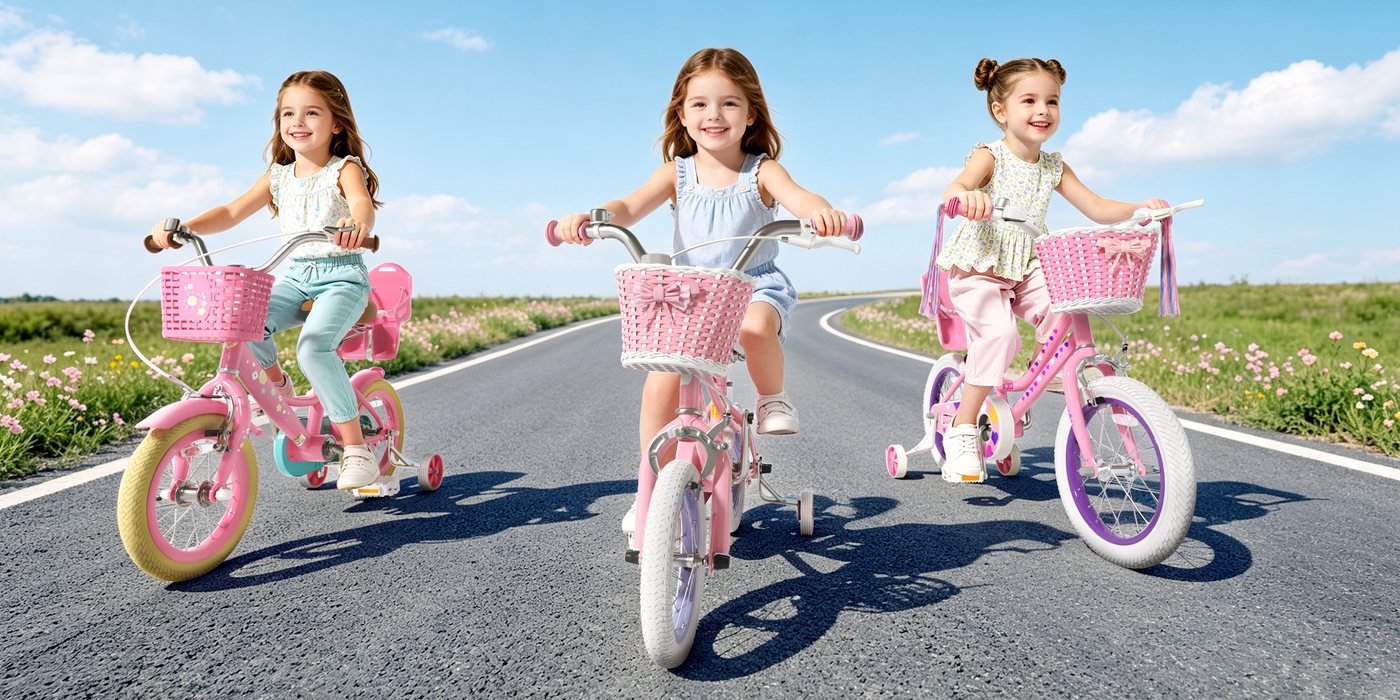
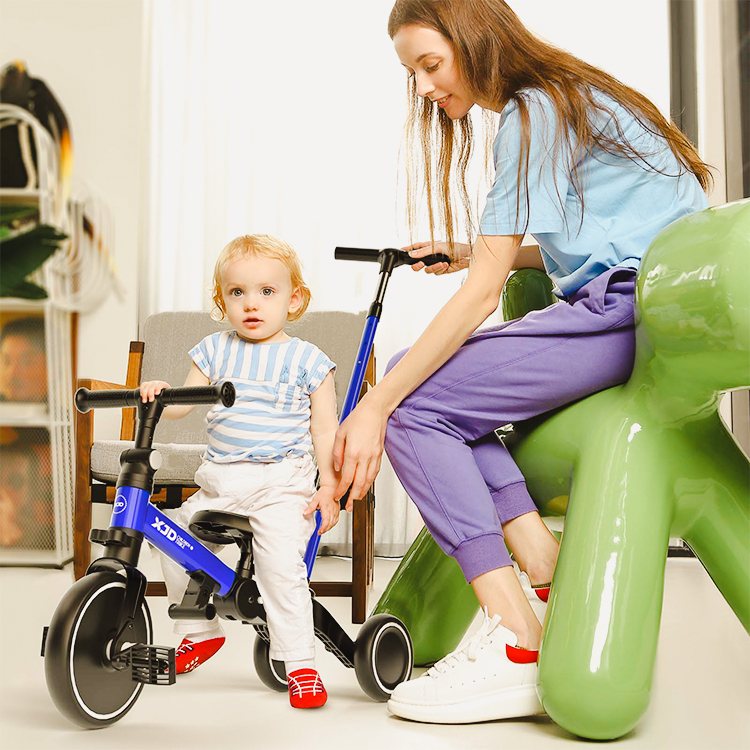
A scooter and a balance bike teach the same lesson from opposite ends, and plenty of children have both on the go at once. If the child is still a passenger, a trike with a push handle; if they are past this, a kids bike with training wheels, or a wiggle car for the flat.
A helmet, worn. The small shell fits from twelve months, the large to fourteen years, and the pad sets exist because a scooter at walking pace still puts a palm on the pavement.
One pattern, from the XJD balance bike up
There is one pattern underneath all of this. Whether it is a balance bike, a kids helmet or a ride on car, the seat is the same soft, supportive PU seat, the grips are the same non-slip rubber, and the wheels are the quiet kind that stay smooth on a pavement slab rather than drumming. Frames are sturdy in the places a toddler leans and rounded in the places a baby grabs, which is most of what the word safe means at this age.
Assembly follows the same pattern. The modular design arrives half built, the tools come in the carton, and installation takes the fifteen minutes between tea and bath, comfortably within one evening. That matters when it is a gift and the child is watching: the thing feels finished, and no adult would be hunting a spanner while a two year old waits for a ride. Every model here is assembled from the same short list of parts.
On this shelf the three-wheel base is the whole point: it stands up on its own while a child climbs on, which a two-wheeler does not.
- One PU seat shape across the bikes, so a hand-me-down feels familiar under a younger child
- Non-slip grips and rounded bolt heads on every frame on this shelf
- Tools in the carton; installation inside fifteen minutes on a kitchen floor
- Published weights, so you know what a toddler can pick up and right again alone
- Colours and sizes listed as separate rows, because that is how they go out of stock