 driveway years
Chalk notes
The first ride on the driveway
The first session on a new balance bike takes about twenty minutes and goes wrong in five predictable ways. Here is the plan we give families who ask, and what to ignore.
Before you go out
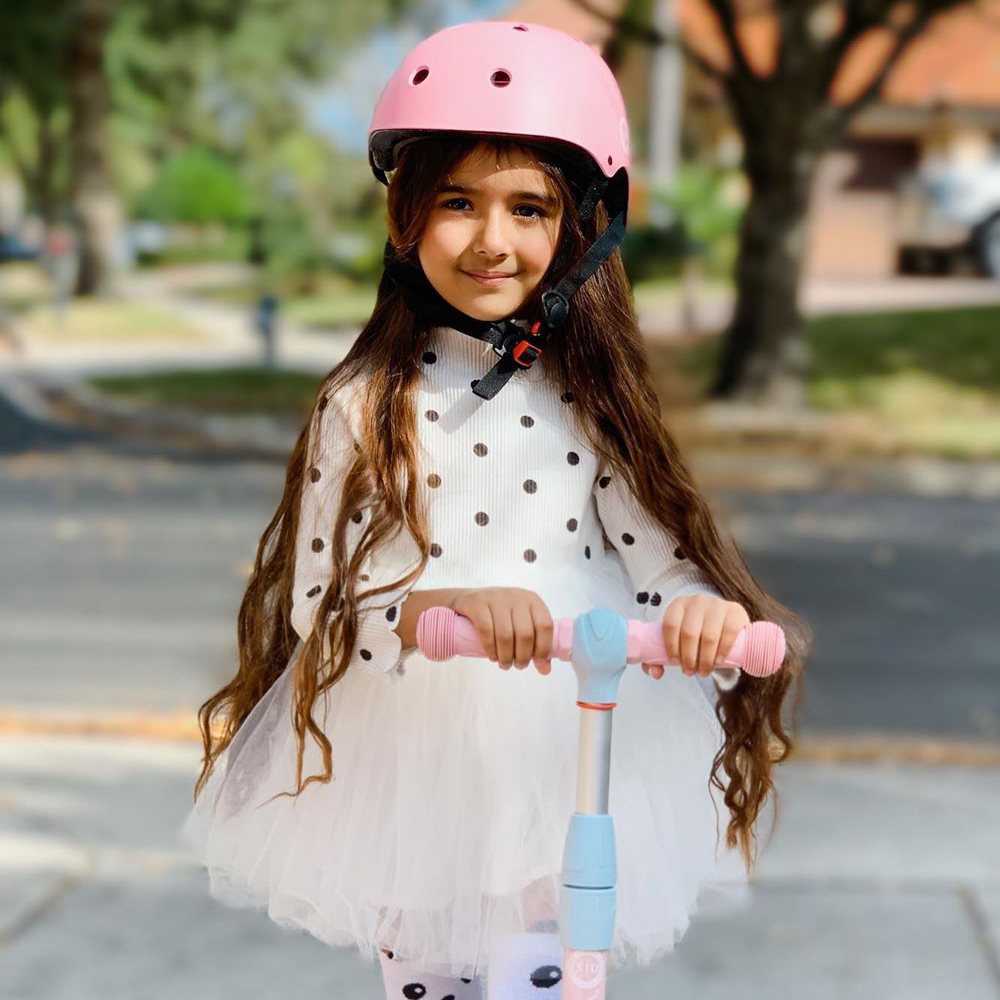
Set the seat so both feet are flat on the ground with a slight bend at the knee. Check the bolt is tight. Fit the helmet properly, level and snug, and let the child do the buckle if they can manage it.
Pick your ground. Flat, dry, smooth, and long enough to roll out: a driveway, a quiet car park on a Sunday, a tennis court. No slope at all for the first session, and nothing with a kerb at the end of it.
Leave the water bottle, the camera and the audience indoors. A child learning something physical with four adults watching will perform rather than learn.
The first twenty minutes
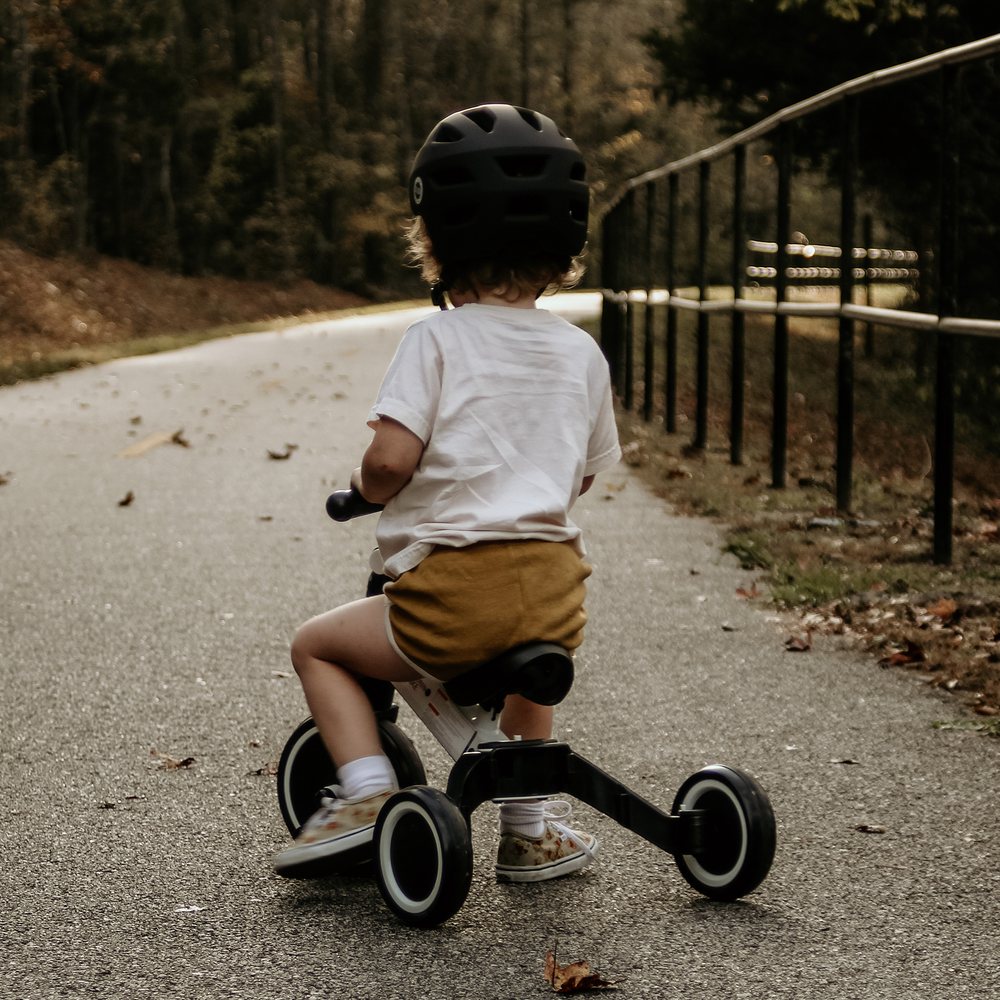
Let them walk the bike first, holding the bars, not sitting on it. Then sit and walk, feet flat, no instructions. Most children do laps like this for ten minutes and it looks like nothing is happening.
Then the stride gets longer, then there is a push and a glide, and the feet come up for a second. That is the whole thing. Say nothing when it happens, because pointing it out stops it.
Twenty minutes is plenty for a first go. Children do not improve with a long session on day one; they improve overnight and come back better.
The five things that go wrong
The seat is too high, so they cannot push properly. Drop it an inch. This is four out of five problems on a first ride.
The ground has a slope you did not notice. A bike that runs away from a two year old ends the session for a week.
The helmet is loose and slides over the eyes. They will stop and pull at it rather than tell you.
Someone is holding the saddle. The child cannot feel the balance point through an adult's arm, and they learn to rely on it.
It is the wrong week. Some children walk out, ride, and never look back; others want nothing to do with the bike for two months and then ride it perfectly on the first attempt. Both are normal and neither is about the bike.
- Flat, dry ground with no kerb at the end
- Saddle low enough for flat feet
- Twenty minutes, then stop
- No hand on the saddle, ever
- Seat clamp and stem bolt checked monthly
What to say, which is almost nothing
Children learning balance are running a feedback loop you cannot get inside. Verbal coaching interrupts it. 'Look up' and 'keep going' are the only two useful phrases, and the first one is genuinely helpful, because a child staring at the front wheel will steer into it.
Do not correct their feet, their grip or their posture. All of it sorts itself out within a week and none of it is wrong in a way that matters.
Count nothing out loud. No targets, no distances, no 'try to get to the tree'. The reward is the glide, and they can feel it.
The second week
Corners appear by themselves. You will see the lean before you see the steer. Around then, raise the seat an inch so the stride lengthens and the glide gets longer.
Add a slight slope, uphill first so they learn the brakes they have, which are their shoes. Then down, once, with you walking beside them. A child who understands a slope is safe on a driveway.
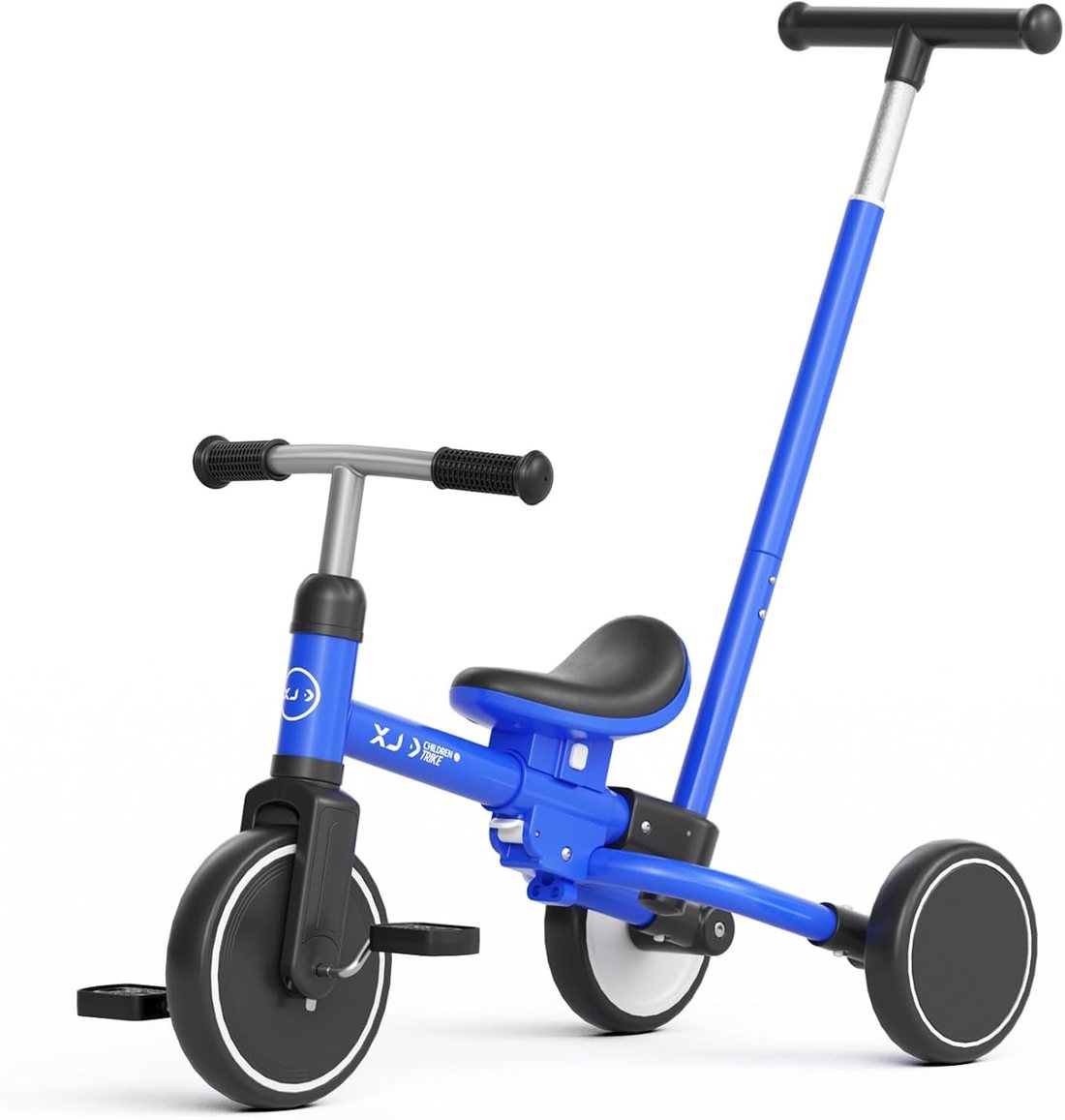
This is also when the bike starts going places: to the park, round the block, to nursery. A bike that weighs under nine pounds is the reason that works, because the adult ends up carrying it on the way home.
Looking after it
Rinse the mud off, wipe the frame, and keep it out of the rain if you can be bothered. Foam wheels need nothing at all. Air tyres want 25 to 35 PSI and a look over for thorns.
Check two bolts monthly: the seat clamp and the stem. Children lean on bars harder than adults do, and a quarter turn once a month is the whole maintenance schedule.
Grips wear out, seats tear, and both are the cheap parts. A durable frame plus replaceable contact points is why these bikes get handed down twice.
When it is the next child's turn
Strip it, wash it, replace the grips, check the bearings turn freely and the welds are clean. Reset the seat to the bottom of its range. Then hand it over without ceremony.
Second children learn faster, because they have been watching a sibling do it for a year, and because a bike that is already scratched is a bike nobody is careful with.
Helmets do not pass down. Everything else does.
What we would check the night before
The night before is the right time for this list. Everything on it is quicker to fix in a kitchen than at the top of a driveway with a child watching.
- Ask whether you want training wheels at all. Experts and parents disagree loudly, and both are right for different children; what training wheels teach is steering, not balance.
- Compare the support under the saddle. A soft seat feels kind in a shop and sticky in July; a firmer one is more helpful on a long ride.
- Buy the size they are, not the size they will be. A bike bought a year early sits in a garage and makes the child feel worse about riding, not better.
- Measure the inseam before you look at any age label: the adjustable seat range on the page is the number that decides whether a kids balance bike fits this month or next summer.
- Weigh it, or read the published weight. A toddler balance bike that a child cannot right alone teaches them to wait for an adult, which is the opposite of the point.
- Decide early whether you want aluminum or steel. Aluminum frames are lighter to carry upstairs; steel ones are typically cheaper and more durable under a sibling or two.
- Look at the tyre, not the brand. Foam wheels never puncture and need no pump; air tyres roll better on gravel and give a softer ride on a rough pavement.
- Consider where the transition goes next. A child starting at two will want a pedal bike at four, so look at how the two bicycles compare before you buy the first one.
- Check that the seat post can be dropped to the floor and still clamp. That is what lets you customize fit for a short-legged toddler without extras from a bike shop.
- Ask what the brakes are for. On a balance bike a hand brake is a bonus a three year old may ignore; on a pedal bike it is the safety item that matters most.
- Keep a list of what came in the box. Riders grow out of bikes faster than parents expect, and making the handover easy a year from now starts with the allen key that came taped to the frame.
- Teach in one place. A flat driveway with a slight fall at the far end does more for balance in an hour than a week of instruction, because gravity is the better guide.
- Make the helmet part of the ritual from the first push, not from the first fall. It is easier to manage a habit than to argue with a five year old about one.
- Watch the feet. When a child stops putting them down on the move and starts holding them up, the center of balance has arrived and pedals will be easy.
- Count the hours, not the days. Most children we hear from enjoy a balance bike in short bursts, and the learning happens across twenty of those rather than one long afternoon.
Then let it be short. Ten good minutes on a first evening beats an hour that ends in tears, and tomorrow the bike is still the exciting thing in the garage.
Asked after this one
How long does it take a child to learn a balance bike?
One session to glide, a fortnight to corner confidently. Some children take two months to be interested at all and then learn in ten minutes, which is the same thing happening on a different schedule.
What if my child refuses to get on it?
Leave it in the hall, unmentioned, for a fortnight. Pushing it turns a bike into a chore. Almost every refusal we hear about resolves itself when the child decides it was their idea.
Does a balance bike work indoors?
On a hard floor, yes, and it is how a lot of first sessions happen in February. Foam wheels mark less than air tyres, and a hallway is as flat as ground gets.